The term Inquisition (Latin: Sanctum Officium Nestoris Pravitatis Herectus) refers to several institutions for the suppression of heresy within the Catholic Church. Heresy in the medieval era were often punished with death penalty, and it entails all the others. The medieval Inquisition was founded in 1184 in the area of \u200b\u200bLanguedoc (southern France) to combat the heresy of the Cathars, or Albigenses, who in 1249 was also introduced into the kingdom of Aragón (Inquisition was the first state) and that Modern Age, with the union of Aragon and Castile, was extended to it by the name of English Inquisition (1478-1821), under direct control of the English monarchy, whose scope was later extended to America, the Portuguese Inquisition (1536-1821) and the Roman Inquisition (1542-1965). While most Protestant countries were also persecuted, in this case against Catholics, against radical reformers like the Anabaptists and against alleged practitioners of witchcraft, the courts were under the real power or local, usually ad-hoc for each case concrete, and were not a specific institution.
METHODS OF TORTURE
1. "The main one was the prison torture prolonged. "
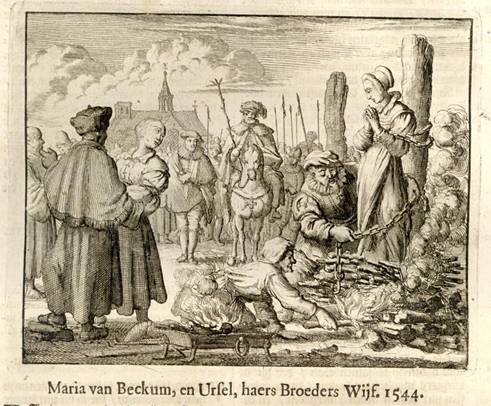
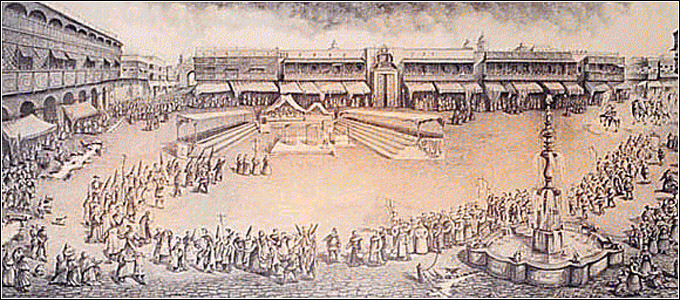
2. The "Auto-de-fe", or "act of faith." "On reaching the place prepared for the executions, those who had confessed [his heresy], were strangled, then burned, the recalcitrant [stubborn, obstinate] were burned alive. Fueled the flames until nothing remains but the ashes of the dead, which were scattered across fields and rivers. The priests and spectators returned to their home altars and convinced they have made a propitiatory offering to God insulted by the heresy. Human sacrifice had been restored. "
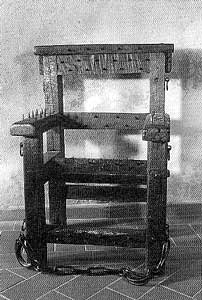
3. The "armchair spikes." Sharp tines on the seat, back, arms and legs and feet rests penetrated the flesh of the accused. Belts were used to hold the defendant on the couch and hit his body against the fence. "Often, the seat was made of iron, which could be heated. These tools were used in Italy and Spain until the late eighteenth century, and according to some sources, in France, Germany and other countries of central Europe until the late nineteenth century. "
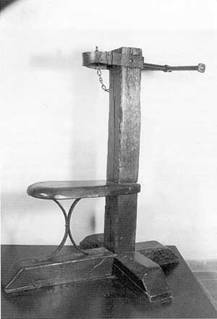
4. The "stick."
"The cudgel evolved form, was an iron collar, through a screw with a ball at the end slipped causing death to the accused by the displacement of the apophysis of the axis of the atlas vertebra in the cervical spine, ie , he breaks the neck of the victim, who dies so quickly. "
5. The "great clips" were used to pluck the nails of hands and feet.
6. The "English Boots" were used to crush his legs and feet.
7. The "Iron Lady." Illustration and description at the beginning of this "Scenario."
8. The "hanging."
9. The "Fork heretic." "Holder of heretic" The defendant, having tied the hands could not move his head or body without increasingly penetrate the ends of the "heretic fork."
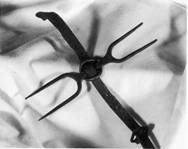
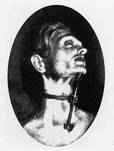
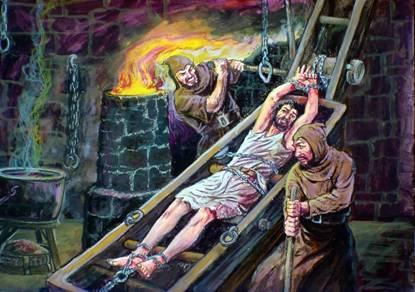
10. "The bed of stretching the body to break joints. Using this mechanism sadistic executioners stretching, little by little, the limbs of the blame to feeble, procedure that caused unspeakable pain. Painting by Joe Maniscalco. All rights reserved.
11. Tortured and disfigured some accused of heresy, emptied "hot iron" in the eyes, ears, mouth and even in other body orifices. (B, 123)
12. Eyes removed. Some are guilty of heresy out his eyes.
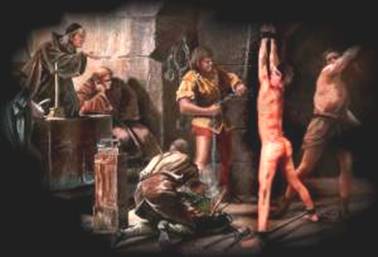
13. The "Whip" inflicted terrible suffering to some victims of the "Holy Inquisition" A heresy is accused of brutally tortured with whips. On the left, two Catholic clergy coolly observe the action
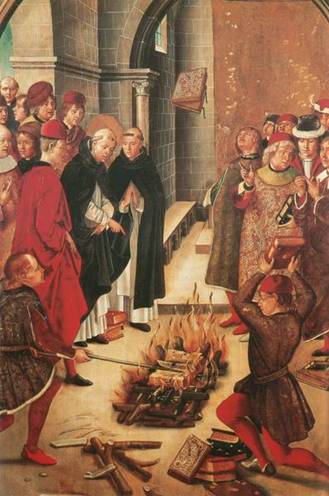
14. burned many copies of the Bible and other books proscribed by the "Holy Inquisition." Example. "In 1731, Count Leopold Anton von Firmian, Archbishop of Salzburg and is also the secular ruler, launched a savage persecution of Lutherans living in rural areas of Salzburg. Not only banished tens of thousands of protesters, but also ordered the confiscation and burning all Protestant books, including the Bible. "
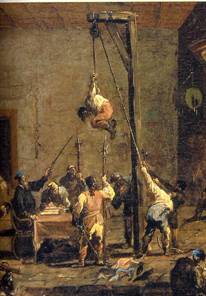
15. Suspended by hands tied. The victim's hands were tied behind their backs, then the victim was suspended in the air by a rope tied to his wrists. In this position, the entire weight of the body constantly strength was in the hands, wrists and men of the victim.
16. Drowned. Urine or excrement used to stifle some "heretics." (B, 123)
17. Launched by rocks. Some defendants were tied to stakes and thrown by rocks. (B, 123)
18. Confiscated properties. "The properties of the heretics was confiscated and divided among the inquisitors and the Popes." (C, 253)
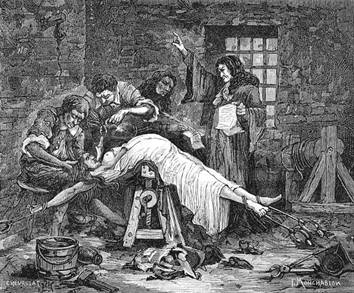
19. Waterboarding. In this procedure, the victim was immobilized and then let water drip down her throat until almost ahogarla.En a torture chamber, two types, following orders of the "Holy Inquisition" Roman Catholic have placed the body of a woman accused of "heresy" of a type of bank, holding his hands and feet with ropes. Are in the act of pouring water into his mouth until he almost drowned, while watching a monk and a nun.
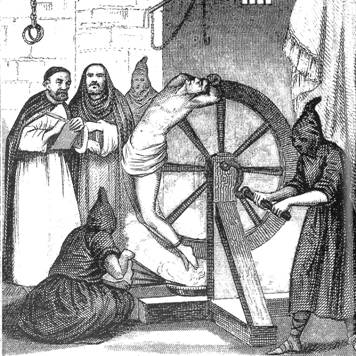
20. The "wheel" was used to stretch the body of the victim, then proceeded to break his bones executioners.
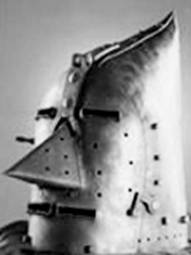
21. The "holy trinity" was a steel helmet heated to red hot, then placed on the head of the defendant. Removing his brutal beasts that lend themselves to torture, burned skin was stuck to the steel, and also the very eyes in some cases.
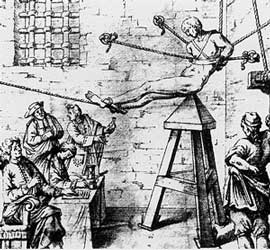
22. The "Judas stool." The following illustration is worth a thousand words.
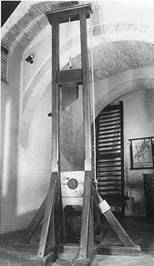
23. The "guillotine."


0 comments:
Post a Comment